Collection: Enameled Cast Iron Bread Ovens
Explore cast iron bread ovens, cloches, and domes in vibrant colors. Ridged base for even baking, dome shape for crispy, golden sourdough loaves.
-
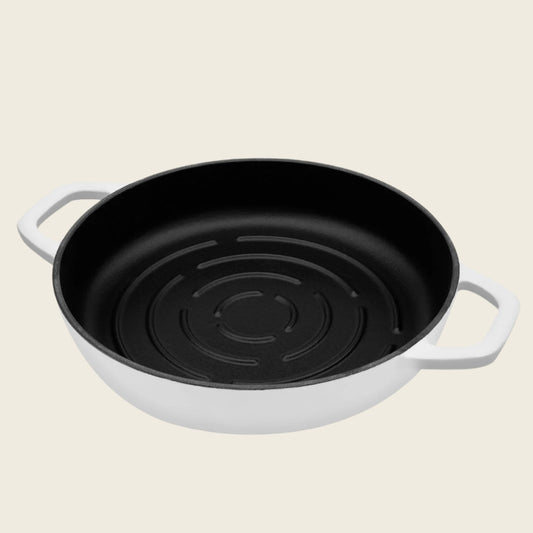
Enameled Cast Iron Bread Oven for Sourdough
Regular price $79.99 USDRegular priceUnit price / perSale price $79.99 USD -
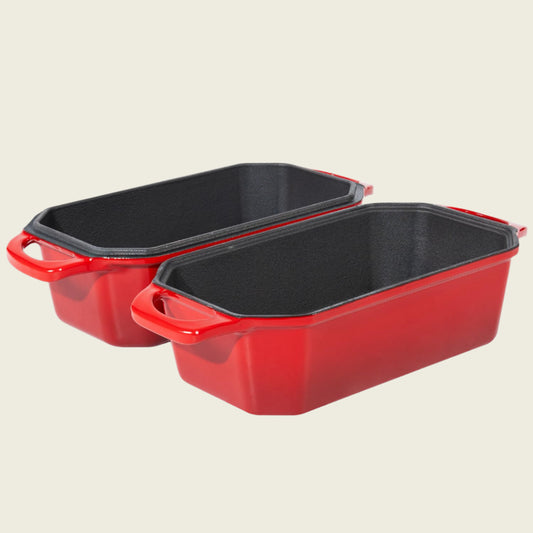
Enameled Cast Iron Loaf Pan
Regular price From $59.99 USDRegular priceUnit price / perSale price From $59.99 USD
-
What does a cast iron bread oven or cloche actually do for my bread?
A cast iron bread oven or cloche surrounds your dough in a small, very hot chamber that traps the steam coming off the loaf, so instead of losing moisture into the big oven cavity, that steam stays close to the crust and gives you more oven spring, a thinner, shatter-crisp crust, and better caramelization than baking on an open tray or stone, while the heavy cast iron walls keep the heat steady so the crumb cooks through evenly.
-
Do I still need to add steam to my oven when I use one of these bread ovens?
Most of the time you do not, because the moisture released from the dough is enough to steam the inside of the bread oven once you close the lid, which is why so many home bakers switch from spray bottles and ice cubes to a closed cast iron baker, but if you want to push the crust even further you can still add a small tray of hot water on a lower rack for the first part of the bake while keeping the lid on and then remove the lid later so the loaf can brown deeply.
-
Do I need to preheat a cast iron bread oven, and how hot should it be?
For the classic open crumb and bold crust you see in artisan sourdough, you will get the best results by preheating both the base and the lid in your oven so the cast iron is fully hot when the dough goes in, because that immediate blast of heat plus trapped steam is what drives strong oven spring; most recipes bake in the 230–245°C / 450–475°F range, with many bakers preheating the bread oven for at least 30 minutes and then removing the lid after the first part of the bake so the crust can dry and color.
-
How do I choose between the rectangular loaf baker and the round bread oven in this collection?
Think about the kind of bread you want to slice: the rectangular baker is shaped for tall sandwich loaves and pan breads with straight sides and even slices that fit in a toaster, while the round dome oven is better for country boules and rustic sourdough with a round profile and dramatic ear; both trap steam and use enameled cast iron for even heat and easy cleanup, so the choice mainly comes down to whether you picture square, everyday slices or round, bakery-style loaves on your cutting board.
-
Are these bread ovens only for sourdough, or can I use them with yeasted and no-knead breads too?
You can use these enameled cast iron bread ovens with almost any lean bread dough, whether it is a wild-yeast sourdough, a quick no-knead recipe, or a standard commercial-yeast country loaf, because all of them benefit from strong heat and steam in the first part of the bake; richer, very sweet or buttery doughs tend to brown faster, so for brioche-style or highly enriched breads it is usually better to lower the oven temperature a bit and shorten the covered time so the crust does not over-darken before the center is done.
-
Can I use these enameled cast iron bread ovens for other cooking besides bread?
Yes, and that is one of the reasons many bakers choose cast iron over a pure ceramic cloche: the bases work well on the stovetop and in the oven for roasting vegetables, searing and roasting small cuts of meat, baking cobblers or gratins, and reheating stews, so even when you are not baking bread you still have a heavy, enameled pan that holds heat beautifully, cleans up easily, and can go from oven to table without feeling like a single-purpose gadget.