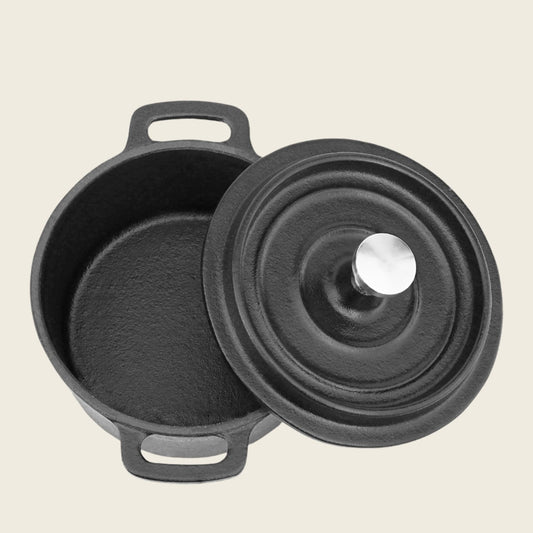
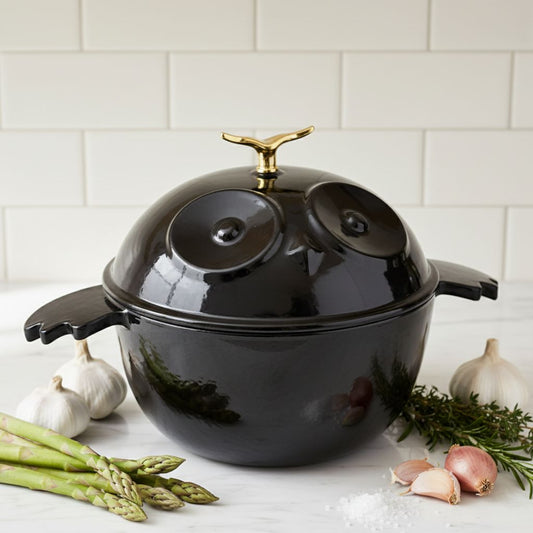
Collection: Mini Cocotte

FAQs
  • What is enameled cast iron and how is it different from regular cast iron?

    Enameled cast iron is traditional cast iron covered in a glass-like enamel coating that is fused on at very high heat. Unlike bare cast iron, the enamel surface is non-reactive, so it will not interact with acidic foods, and it does not need to be seasoned or kept oiled to prevent rust.

  • Does enameled cast iron need to be seasoned?

    No. The enamel layer seals the iron so there is no bare metal to protect, which means you can cook straight away and wash with soap and water without stripping any seasoning layer.

  • Is enameled cast iron safe and non-toxic?

    High-quality enameled cast iron uses a glass-based enamel that is non-reactive and does not rely on PTFE or PFOA-type non-stick chemicals. As long as the enamel is intact (not badly chipped or cracked), it is generally considered a safe, stable surface for everyday cooking, including acidic sauces.

  • What heat settings should I use, and will it work on my stove?

    Enameled cast iron works on gas, electric, ceramic, and induction stovetops and can usually go in the oven up to about 500°F, but it performs best on low to medium heat because it holds heat so well. It warms more slowly than thin steel or aluminum, then stays hot, so most cooking does not need the highest burner setting.

  • Can I put enameled cast iron in the dishwasher?

    Occasional dishwasher cycles are usually fine, yet warm water, mild soap, and a soft sponge are the safest everyday routine.

  • What utensils should I use with enameled cast iron?

    Silicone, wooden, or nylon utensils are the safest choice because they will not scratch or dull the enamel. Light use of metal utensils will not instantly ruin a pan, but repeated scraping can mark the surface over time, especially if you cut directly in the pan.

  • How do I clean stains or burnt-on food?

    Let the pan cool, then soak it with warm water and a little dish soap for 15–20 minutes to loosen stuck bits, and use a soft sponge or plastic scraper to lift them off. For tougher stains, a paste of baking soda and water or a gentle cleaner like Bar Keepers Friend can help restore the enamel without harsh scrubbing.