


The Cast Iron Potjie
The Cast Iron Potjie
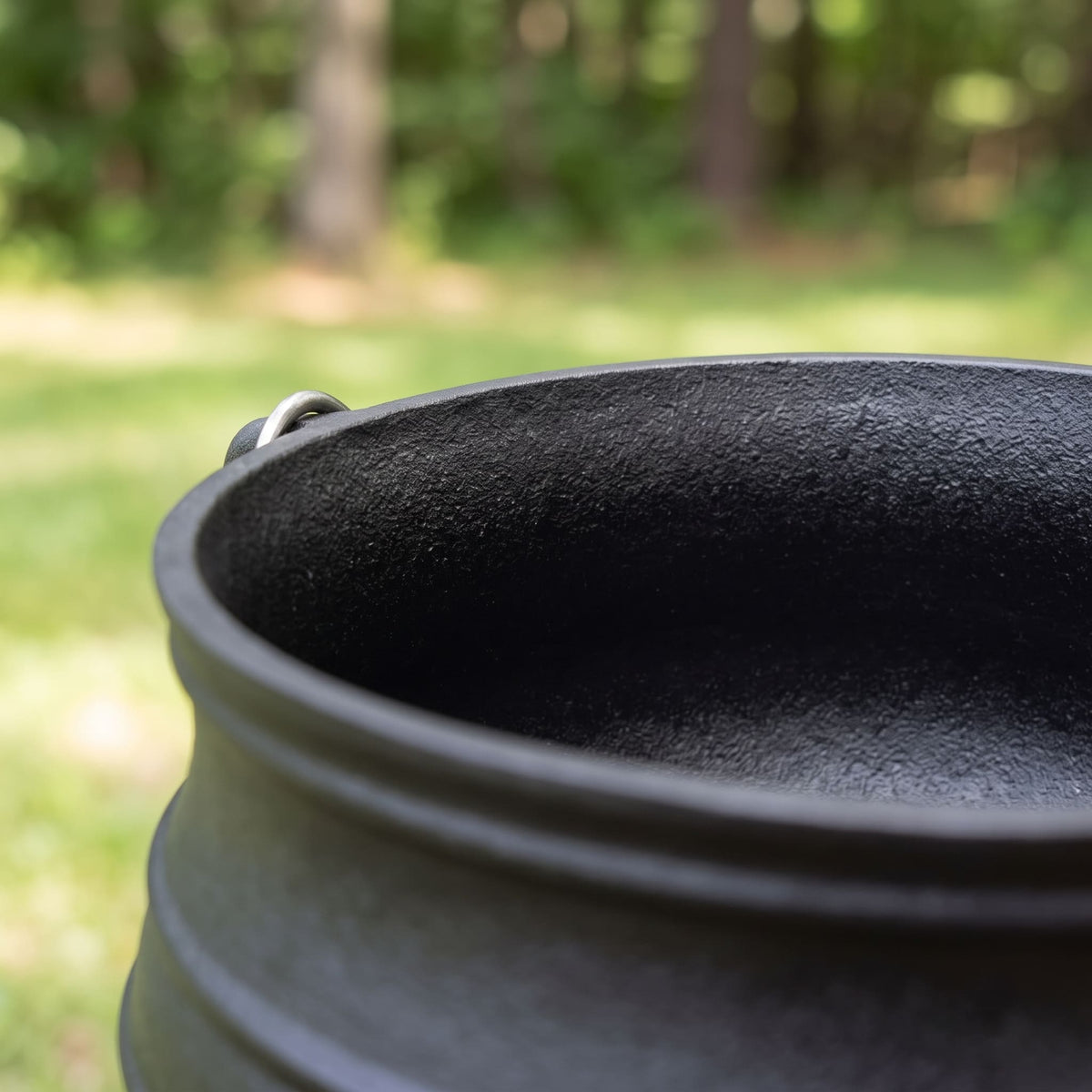
Made from solid, pre-seasoned cast iron, this three-legged cauldron is built for slow cooking over coals or an open fire. Use it for hearty stews, serving food or seasonal displays.
In stock - Most orders ship within 1 business day
Couldn't load pickup availability
 Free Shipping
 30-Day Returns
 12-Month Warranty


Key Features
Key Features
A traditional three-legged cast iron potjie pot made for slow cooking over coals or an open fire. Its deep, rounded body and fitted lid make it ideal for potjiekos, hearty stews, beans and slow-cooked meats.
Pre-seasoned with vegetable oil and available in four sizes, from 6 to 14 qt.
Features
- Solid cast iron body and lid for durable, heavy-duty use.
- Three raised legs for cooking over coals or an open fire.
- Deep, rounded shape for stews, beans, chili and potjiekos.
- Fitted cast iron lid helps retain heat and moisture.
- Pre-seasoned with vegetable oil for easy first use.
- Available in 6, 8, 10 and 14 qt sizes.
Dimensions
Dimensions
Potjie Size Guide
| Potjie Size | Capacity | Good For |
|---|---|---|
| Size #2 | 6 Qt / 1.5 Gal | Family meals, about 4–6 people |
| Size #3 | 8 Qt / 2 Gal | Family + guests, about 6–8 people |
| Size #4 | 10 Qt / 2.5 Gal | Small gatherings, about 8–10 people |
| Size #6 | 14 Qt / 3.5 Gal | Larger gatherings, about 10–14 people |
Dimensions
| Potjie Size | Top Diameter | Pot Depth | Height with Legs | Overall Width | Weight |
|---|---|---|---|---|---|
| 6 QT · Size 2 | 9.25 in / 23.5 cm | 6.5 in / 16.5 cm | 9.45 in / 24 cm | 10.24 in / 26 cm | 12.76 lb / 5.8 kg |
| 8 QT · Size 3 | 10.24 in / 26 cm | 7.1 in / 18 cm | 10.43 in / 26.5 cm | 11.42 in / 29 cm | 17.16 lb / 7.8 kg |
| 10 QT · Size 4 | 11.42 in / 29 cm | 8.27 in / 21 cm | 11.8 in / 30 cm | 13 in / 33 cm | 24.2 lb / 11 kg |
| 14 QT · Size 6 | 12.4 in / 31.5 cm | 9.84 in / 25 cm | 13 in / 33 cm | 14.17 in / 36 cm | 37.4 lb / 17 kg |

Shipping, Returns & Warranty
Shipping, Returns & Warranty
Fast & Free Shipping
- Free Shipping Across the US & Canada
Free standard shipping with no minimum order value. - Ships Fast
Most orders leave our local warehouses within 1 business day, and usually arrive in 3–5 business days.
Easy 30-Day Returns
- Changed your mind? No stress.
You have 30 days from delivery to request a return. - Simple Return Shipping
We’ll send you a prepaid return label, so you don’t have to figure it out yourself. A flat $9.99 return shipping fee will be deducted from your refund for each product returned.
Arrived Damaged? We'll Make It Right.
If your cookware arrives chipped, cracked or otherwise damaged in transit, send us a photo and we’ll arrange a replacement.
In most cases, there’s no need to return the damaged item.
12-Month Warranty
If your cookware chips, cracks or flakes due to a manufacturing defect within 12 months of purchase, contact us and we’ll arrange a replacement or refund.
Materials & Finish
Materials & Finish
Use & Care
Use & Care
How we keep our prices fair
How we keep our prices fair
Cookware sold through traditional retail channels can pass through several layers before reaching the customer, including distributors, wholesalers and retailers. Each layer adds its own costs and margin.
We keep our supply chain simpler. We work directly with experienced cast iron manufacturers and sell directly to our customers, without traditional wholesale and retail markups.
By keeping those layers to a minimum, we can offer well-made cast iron cookware without traditional retail mark-ups.


Why You'll Love It
-

More Than a Halloween Decoration
-

Three Legs for Cooking Over Coals
-

Made for Slow-Cooked Meals


I've been wanting a cauldron for ages, but kept talking myself out of buying one purely for aesthetic reasons. As much as I wanted a cauldron sitting around my kitchen, I knew most of the decorative ones would be useful for little more than holding popcorn.And then I stumbled across this CAST IRON beauty.It's a real, functional cauldron that works perfectly well on my gas range. My teenager has already been making spiced cider in it, and I'm looking forward to making basically every one of my fall and winter favorites--Brunswick stew, chili, hot cocoa, broccoli cheddar soup, more cider...all the things I could make in a boring old stockpot, except now I get to make them in a CAULDRON.It's an 8-quart #3 cauldron, by the bye, so Hermione would be proud. It's large enough for actual family-sized batches of food, and the legs mean it can also stand over a campfire, so you KNOW this thing is going camping with us.It's exactly what I wanted: all the witchy aesthetic joy of having a cauldron in my kitchen, except it's actually useful cookware instead of a Halloween prop.Hearth witch approved!


I have gotten "cast iron" things before and was disappointed with aluminum. This cauldron however is SUPER heavy and most definitely cast iron!! It is well made and it looks fantastic! The handle on it is sturdy, i dont know the material, but i carried this from room to room and the handle didnt bend or give way to the cast iron. This is a fantastic purchase! I am so excited!


Super sturdy, solid cast-iron (with the exception of the handle). It's heavy-duty and durable. The lid fits on it perfectly, and the handle allows for easy lifting of the entire cauldron. It is as heavy as expected for a cast-iron and still easy to lift and carry. am excited to use this for many reasons beyond Halloween too! For the immediate future (Halloween of course), I'm using it as a decoration next to my front door, filled with candy and other treats to hand out on Halloween night. After the holiday, I am excited to use it on our firepit to make campfire stew. It's a great size as a candy/treat bowl and as a pot of stew. The pre-seasoning has held up well in the humid weather (indoors), and rust has not been an issue in any way. The value for the cast-iron cauldron is great, even if using it for a long-lasting decoration (not a disposable, plastic tub), but also for the versatility of actually stewing food over a hot fire.
excitement only a SAFFA can feel lol
Heavy, well-cast, no obvious flaws. Looks great as Halloween decor and works well as a serving dish. Good size at 6 qt. Will probably take this camping since the long legs should work awesome with campfires. Plus my gf absolutely cackled when I showed it to her so bonus points there.